


- Introduction
- Why North York Condo Moves Are Different From Other Moves
- Types of North York Condo Buildings — and How Each One Changes Your Move
- The Most Common Condo Moving Challenges We Encounter
- How Freight Elevator Reservations Actually Work
- What Property Management Usually Requires Before Moving Day
- The Pre-Move Building Requirements Checklist
- North York Condo Neighbourhoods That Create Unique Moving Challenges
- Loading Dock Problems We See Every Week
- Furniture and Items That Commonly Cause Problems in Condo Moves
- Moving Between Condo Towers in North York
- How Much Does Condo Moving in North York Cost?
- Condo Moving Mistakes That Cause Delays and Extra Stress
- Should You Handle a Condo Move Yourself or Hire Professionals?
- Need Condo Movers in North York?
- Frequently Asked Questions
Introduction
Condo moves are not just smaller versions of house moves. They run on someone else's schedule. In our experience, the biggest surprise for first-time condo movers in North York isn't the packing — it's discovering that the building, not the moving day, controls the timeline. A house move fails on your end if you're not ready. A condo move can fail on the building's end even when you've done everything right, because a freight elevator window, a loading dock slot, or a property management form can derail an otherwise perfectly planned day.
We've moved people in and out of towers across Willowdale, Yonge and Sheppard, North York Centre, Bayview Village, and Don Mills long enough to see the same mistakes repeat themselves: elevator bookings made too late, deposits forgotten until the morning of the move, furniture that doesn't fit through a service corridor, and move dates picked during the busiest week of the month without knowing it. This guide walks through condo moving north york the way we actually experience it on site — building rules, elevator logistics, loading docks, deposit amounts, insurance requirements, and the neighbourhood-specific quirks that change how a move plays out.
Condo moving in North York is not just about loading a truck. It is about elevator booking windows, loading dock scheduling, property management paperwork, deposits, insurance minimums, and the building-specific realities that shape every move differently. This guide covers all of it, with real ranges and numbers, not just general advice.
Why North York Condo Moves Are Different From Other Moves

A house move is largely a private transaction between you and your driveway. A condo move involves a third party — the building — that has its own paperwork, its own equipment, and its own priorities, and none of those are designed around your convenience.
Condo Rules and Regulations
Every condo corporation in North York has a move-in/move-out policy, and no two are identical. Some buildings allow moves seven days a week; others restrict them to weekdays only, or block Sundays and statutory holidays entirely. We've worked in towers where the rules run four pages long and towers where the superintendent hands you a single sheet at the front desk. The rulebook, whatever its length, usually governs the elevator, the loading dock, permitted hours, and who is financially responsible for damage. These rules are set by the condo corporation's board under the framework of Ontario's Condominium Act, and residents have a right to request a copy in advance — the Condominium Authority of Ontario publishes a plain-language breakdown of how condo rules are created, communicated, and enforced if you want to understand your building's legal footing before move day.
Freight Elevator Scheduling
Almost every mid-rise or high-rise condo in North York requires a booked freight elevator, and that booking is separate from booking us as your movers. In our experience, this is the single most misunderstood part of a condo move — people assume that hiring a moving company automatically secures building access, when in reality the elevator reservation and the moving company reservation are two different appointments that need to be confirmed independently, usually with the property management office or concierge desk.
Building Access Restrictions
Fobs, visitor parking passes, loading dock gates, and concierge sign-in sheets all add steps that a house move never requires. We've had crews wait at a locked loading dock gate for twenty minutes because a resident assumed the superintendent would "just know" a move was happening that day.
Move-In and Move-Out Procedures
Many buildings require the outgoing resident and the incoming resident to each file separate paperwork, even on the same day. That means a condo-to-condo move within the same North York building can still require two full sets of forms, two deposits, and two elevator bookings.
Types of North York Condo Buildings — and How Each One Changes Your Move

Most moving guides talk about "condo moving" as one single category. It isn't. A move out of a 1980s low-rise in Bayview Village and a move into a brand-new 45-storey tower at Yonge and Sheppard involve almost none of the same logistics. Here's how we plan differently depending on the building type.
High-Rise Towers (20+ Storeys)
These are the most common condo type along the Yonge subway corridor. High-rises almost always require a formal elevator booking, often with a strict two- to four-hour window, and frequently have the most competition for that window because of unit density. Expect a mandatory Certificate of Insurance and, in most towers, a refundable move deposit.
Luxury and Boutique Condos
Buildings with upgraded lobbies, stone or hardwood common-area flooring, and higher-end finishes tend to have stricter floor-protection requirements — masonite board or rubber runners laid down before a single box moves — and property management staff who supervise the move in person. Damage deposits here run higher than in standard buildings, and any scuff on a lobby wall or elevator interior can trigger a real deduction, not just a warning.
New Construction and Recently Registered Buildings
Newly occupied towers create a different kind of chaos: dozens of units closing and moving in during the same few weeks. Elevator calendars fill up fast, and developers sometimes still have their own trades using the freight elevator for deficiency work, which competes with resident move-in slots. Booking as early as your closing date allows — sometimes even before you have keys — is the only way to avoid getting pushed to a late-availability slot.
Older, Established Buildings
Towers built before the 2000s, common in parts of Willowdale and Don Mills, often have smaller freight elevators than their unit count would suggest, narrower service corridors, and less formal booking systems — sometimes still run through a superintendent's paper calendar rather than an online portal. These buildings are usually more flexible on scheduling but far less forgiving on elevator dimensions, so measuring large furniture matters more here than anywhere else.
Low-Rise and Walk-Up Buildings
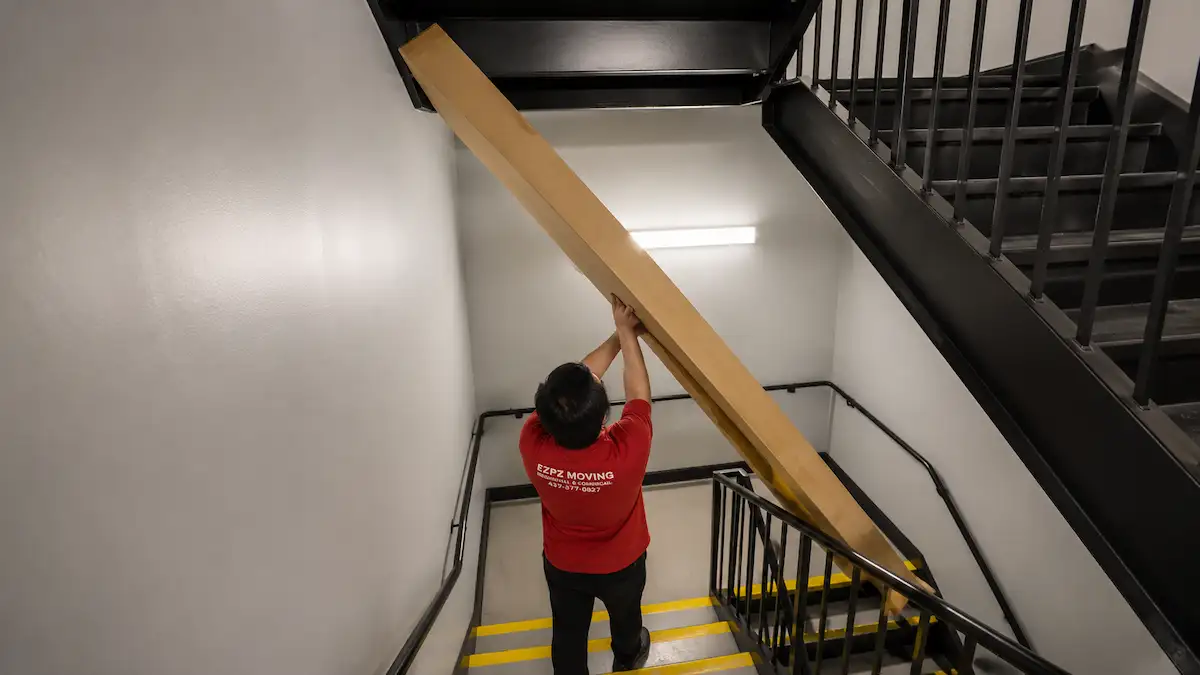
Some North York condos are low-rise, four- to eight-storey buildings without a dedicated freight elevator at all. Moves here often use the regular passenger elevator on a booked schedule, or in a handful of older walk-ups, require carrying items up a stairwell entirely. Crew size and time estimates change significantly when there's no freight elevator to rely on.
Before you book movers, identify which of these five categories your building falls into. It changes how much lead time you need, what deposit range to expect, and whether floor protection is optional or mandatory.
The Most Common Condo Moving Challenges We Encounter
Limited Elevator Reservation Windows
Booking windows are often two to four hours long, not open-ended. Once that window closes, some buildings will not extend it, no matter how much is left in the truck — the next tenant's window simply begins on schedule.
Loading Dock Conflicts
Loading docks are frequently shared with garbage collection, courier deliveries, and other residents' moves. During busy periods, a dock that looked wide open on the booking calendar can already have a delivery truck idling in it.
Underground Parking Limitations
Many North York towers have underground garages with clearance heights that a standard moving truck cannot use, typically anywhere from 6'6" to 7'0" depending on the building. In our experience, this is one of the most overlooked details — residents book a move without checking whether the truck can even enter the garage, which forces a longer carry from street-level parking instead.
Long Carry Distances
Some buildings place the loading dock far from the freight elevator, and the freight elevator far from the unit. A "quick" condo move can turn into a move with a hundred-foot carry before a single box even reaches the truck, and most moving companies bill a long-carry fee once that distance passes a set threshold.
Busy Hallways and Shared Spaces
Hallways in older North York towers are narrower than newer construction, and moving day often overlaps with other residents coming and going, dog walks, and deliveries. We plan around this by protecting corners, corridors, and elevator interiors before a single item leaves the unit.
High-Rise Delays During Peak Moving Season
The last week of the month, and especially the last weekend, is consistently the busiest window for condo moves across the city. Buildings get flooded with elevator requests, and slower buildings can run out of available time slots days before month-end.
How Freight Elevator Reservations Actually Work
Why Buildings Require Reservations
Freight elevators are shared infrastructure, and condo corporations use bookings to prevent multiple moves from colliding on the same day and to protect the elevator cab from unpadded furniture.
Typical Booking Windows and Notice Periods
Most towers we work in offer windows somewhere between two and four hours, and generally ask for five to fourteen business days of advance notice — busier buildings around Yonge and Sheppard tend to sit at the higher end of that range, especially heading into month-end. Booking windows are usually restricted to weekday daytime hours, roughly 8am to 5pm Monday through Friday, though a growing number of buildings now allow Saturday moves by request. Sunday and statutory holiday moves remain the exception rather than the rule.
Security Deposits
A refundable elevator or move deposit is standard in most North York condos, generally landing somewhere between $200 and $750 depending on the building's age, finishes, and management company. This deposit is held by the condo corporation, not by your moving company — it never appears on a mover's invoice — and covers any damage to the elevator cab, hallway walls, or lobby flooring. It's typically refunded within a few weeks after a post-move inspection confirms no damage occurred.
Insurance Requirements
Property management almost always requires a Certificate of Insurance (COI) from your moving company before confirming the booking, usually showing commercial general liability coverage in the $2 million to $5 million range. Buildings with higher-end finishes or larger common areas tend to ask for the upper end of that range. Ask your moving company to send the COI directly to your property manager well before your move date — this single step, more than any other, is what prevents a last-minute booking cancellation.
Common Mistakes Residents Make
We consistently see three mistakes: booking the elevator too close to the move date, assuming the booking confirms both the elevator and the loading dock together when many buildings actually require these as two separate reservations, and forgetting that the Certificate of Insurance has to come from the mover, not the resident.
What Happens When Elevators Are Double-Booked
When a booking system fails or two moves get confirmed for the same window, the building's management office typically decides who gets priority — often whoever booked first. We've had to reschedule loading order on-site more than once because a second crew showed up expecting the same window.
Book your elevator window the moment you have a confirmed move date, and treat it as a separate task from booking your movers. Confirm the deposit amount, the insurance minimum, the inspection process, and the exact time window in writing — not verbally with the concierge.
What Property Management Usually Requires Before Moving Day
We ask clients to send us the building's rules package as soon as it's available, because it tells us exactly what the crew needs to bring — extra padding for a narrow elevator, a smaller truck for a tight loading dock, or additional lead time if the building requires the certificate of insurance ten business days in advance instead of two. Many North York buildings are run by large third-party property management firms rather than a single independent superintendent, and each firm tends to have its own standardized move forms and portals, which is part of why no two towers feel the same on move day.
| Requirement | Typical Range or Detail | Why It Matters |
|---|---|---|
| Moving Form / Notice | Written notice, usually 5–14 business days ahead | Confirms the date, time, and unit are on record |
| Certificate of Insurance | $2M–$5M commercial general liability from the mover | Protects the building against damage claims |
| Move Deposit | $200–$750 refundable hold, charged to the unit owner | Covers potential damage to elevators, hallways, or lobbies |
| Loading Dock Booking | A separate reservation from the elevator, in many towers | Prevents dock conflicts with deliveries or other moves |
| Move Time Restrictions | Weekday daytime hours; some Saturdays by request | Limits noise and traffic in shared spaces |
| Floor Protection | Masonite board or rubber runners, sometimes mandatory | Prevents scuffing to lobby and hallway flooring |
These numbers are typical ranges, not guarantees — always confirm the exact figures with your specific building, since even towers on the same block can differ.
The Pre-Move Building Requirements Checklist
Before you commit to a move date, run through this list with your property management office. It's the same sequence we walk clients through before every North York condo move.
- Confirm the elevator booking window — exact start and end time, not just the date.
- Ask whether the loading dock needs a separate reservation from the elevator.
- Get the exact deposit amount and refund timeline in writing.
- Confirm the minimum insurance coverage your mover's Certificate of Insurance needs to show.
- Measure the freight elevator's interior dimensions and door height against your largest furniture pieces.
- Check underground garage clearance if you're hoping to load from inside the building.
- Ask if floor protection (masonite/runners) is mandatory or optional.
- Confirm allowed move days and hours, including whether weekends are available.
- Find out if a building staff member or security guard needs to supervise the move.
- Ask what happens if you go over your booked window — some buildings simply end access, others charge an overage fee.
Screenshot or print this checklist and bring it to your first call with property management. Buildings answer these questions far faster when you ask all ten at once instead of calling back repeatedly.
North York Condo Neighbourhoods That Create Unique Moving Challenges
Willowdale High-Rise Buildings
Willowdale has some of the densest condo development along the Yonge subway corridor, and its towers see heavy elevator demand almost every weekend. Traffic on Yonge Street and the side streets around Willowdale can also make truck positioning tighter than it looks on a map.
Yonge and Sheppard Condo Towers
This intersection is arguably the busiest condo corridor we work in across North York. Buildings here are taller, elevator competition is higher, and loading docks tend to be shared among more units, which means booking early isn't optional — it's the difference between getting a workable window and getting whatever is left over.
North York Centre Developments
Newer towers around North York Centre often have better-designed loading docks and wider freight elevators than older buildings, but they also tend to have stricter, more formally enforced booking systems, since property management here deals with move requests constantly.
Bayview Village Condominiums
Bayview Village buildings are generally quieter than the Yonge-Sheppard corridor, but parking near the building can be limited, and some towers have smaller freight elevators than their size would suggest, which catches people off guard with larger furniture.
Don Mills Residential Towers
Don Mills combines condo towers with a more suburban layout, so loading docks are sometimes easier to access, but the distance from Highway 401 and the DVP means timing a move around rush hour traffic matters more here than in the denser subway corridor.
Loading Dock Problems We See Every Week
Small Loading Areas
Some older buildings were built before condo moving was as common as it is today, and their loading areas simply weren't designed for the volume of moves happening now.
Shared Loading Bays
A single bay shared by multiple units means one late move can push every booking behind it back by an hour or more.
Delivery Truck Conflicts
Furniture deliveries, appliance drop-offs, and courier vans routinely compete for the same space as move trucks, particularly earlier in the day.
Building-Specific Restrictions
Some docks have height or length limits that rule out larger trucks entirely, forcing multiple smaller trips instead of one efficient load.
How Preparation Prevents Delays
Confirming dock dimensions and booking windows before move day, rather than assuming, is the single biggest factor separating a smooth condo move from a stressful one.
Furniture and Items That Commonly Cause Problems in Condo Moves
Large Sectionals
Sectionals frequently need to be broken down into individual pieces to clear both the unit's doorway and the elevator cab. We measure the diagonal depth of a sectional's largest piece against the elevator door opening before move day whenever possible, not on the spot.
King-Size Mattresses
Standard king mattresses are often right at the size limit for a freight elevator, and in a handful of older buildings, they need to go up the stairwell instead. A mattress bag helps protect it either way.
Dining Tables
Tables with fixed bases or wide tops can require disassembly that isn't obvious until the crew is standing in front of the elevator doors.
Exercise Equipment
Larger home gym equipment and treadmills are heavy enough that long carry distances between the dock and the elevator become a real factor in timing, and some units require partial disassembly to fit through service corridors.
Oversized Appliances
Extra fridges, deep freezers, or larger televisions purchased for a new condo sometimes don't clear the elevator dimensions listed in the building's own rules document, which is why we check those dimensions ahead of time rather than at the door.
Pianos and Safes
These need to be flagged when you book, not discovered on move day. A piano or gun safe that shows up as a surprise means the crew has to improvise with the wrong equipment, which slows down the entire booked elevator window and can push the move past its allotted time.
Moving Between Condo Towers in North York
Condo-to-Condo Moves
Moving from one North York tower to another means coordinating two separate buildings, two elevator bookings, and often two different sets of move-day rules on the same day.
Downtown Toronto to North York Condo Moves
These moves add a longer drive and more variable traffic into the mix, and timing the elevator windows on both ends around that drive time takes more planning than a same-neighbourhood move.
North York Condo to House Moves
Going from a condo to a house flips the challenge — one end has an elevator window and a deposit, the other has a driveway and no time limit at all, so the condo side typically dictates the schedule for the whole day.
Coordinating Two Different Buildings
When both ends of a move are condos, we typically build the day around whichever building has the tighter window, since that's the constraint that can't flex. Anyone planning this kind of move within the city benefits from thinking through the full day in advance, which is part of what we cover in our broader Toronto moving guide for residents juggling more than one building's rules on the same date.
How Much Does Condo Moving in North York Cost?
Pricing depends heavily on access, not just distance. A move with a short carry, ground-level loading dock, and an easy elevator booking typically costs less than a move with a long carry, underground parking restrictions, and a tight elevator window, even if the two units are the same size. As a rough starting point, a one-bedroom condo move in North York generally lands between $500 and $900, and a two-bedroom condo runs closer to $700–$1,300, with elevator wait time being the single biggest swing factor between the low and high end of that range.
Factors That Affect Condo Moving Costs
Crew size, truck size, and total time on site all shift based on building access.
Elevator and Access Issues
Long carries and shared docks add time, and time is the main driver of cost in a condo move.
Distance Between Locations
A local move within North York is generally more predictable than a move crossing into downtown Toronto or another municipality during rush hour.
Packing Requirements
Fragile items, disassembly, and reassembly all add labour time regardless of building type.
Timing of the Move
Month-end and weekend moves are in higher demand, which can affect both availability and price. For a full breakdown of hourly rates, crew-size pricing, and a property-type cost table specific to this area, our detailed North York moving cost guide covers every dollar figure in depth, since pricing isn't the focus of this particular guide.
Condo Moving Mistakes That Cause Delays and Extra Stress
Forgetting Elevator Reservations
This is the most common mistake we see, and it's the one most likely to push a move back by hours or an entire day.
Ignoring Building Rules
Skipping the rules document means missing requirements like insurance certificates or move-time restrictions until it's too late to fix them.
Leaving Packing Until the Last Minute
A condo's tight elevator window leaves no room for a crew to wait around while boxes get packed on the spot.
Incorrect Parking Arrangements
Assuming street parking will be available, or that a truck can fit in an underground garage, often creates a delay right at the start of the day.
Not Measuring Furniture
Furniture that doesn't clear the elevator or the unit doorway needs to be dealt with on the spot, which costs time that a tight booking window doesn't have.
Sending the Wrong Certificate of Insurance
Some buildings require specific coverage minimums or additional insured wording naming the condo corporation. A generic COI that doesn't match what the building asked for can get a booking rejected days before the move, sometimes without much warning.
Booking Too Close to Month-End
Move-in and move-out dates cluster heavily around the last few days of the month, and that's exactly when elevator and dock availability disappears first.
If your closing date lands near month-end, book your elevator window and your movers as early as possible. This is consistently the tightest availability period across North York's condo towers.
Should You Handle a Condo Move Yourself or Hire Professionals?
Equipment Requirements
Furniture dollies, elevator padding, and proper straps matter more in a condo than in a house, since a scratched elevator wall or lobby floor can mean a lost deposit.
Building Liability Concerns
Property management holds someone financially responsible for damage during a move, and a professional crew with insurance in place removes that risk from the resident.
Time Commitment
A tight elevator window doesn't leave room for a slow, improvised move, which is where a lot of self-managed condo moves run into trouble.
Physical Challenges
Long carries, narrow hallways, and disassembly work add up quickly, especially in larger units or moves involving stairs when an elevator is out of service.
When Professional Movers Make More Sense
For anyone weighing whether to manage a condo move solo or bring in help, the calculation usually comes down to how tight the building's access really is. Buildings with generous elevator windows and ground-level docks are far more forgiving than towers with short reservations and shared loading bays, and that's usually the point where working with an experienced North York movers team starts to make a real difference in how the day actually goes.
Need Condo Movers in North York?
Condo moving in North York asks for more planning than most residents expect going in, because so much of the day depends on someone else's calendar — the building's, not yours. Elevator windows, loading dock bookings, deposits, insurance minimums, and property management paperwork all need to line up before a single box gets carried out the door, and missing any one of them can turn a straightforward move into a stressful one.
Planning a Condo Move in North York?
In our experience, the moves that go smoothly are the ones where the building's requirements were treated as seriously as the packing list. That's the difference proper coordination makes, and it's exactly where local, hands-on condo moving experience pays off. Not sure what your move will cost first? Check our North York moving cost guide for real pricing ranges before you book.
Call us directly: (647) 676-5700
Frequently Asked Questions About Condo Moving in North York
How early should I reserve a freight elevator?
Most North York buildings recommend booking five to fourteen business days ahead, though busier towers along the Yonge-Sheppard corridor can fill up even further out during month-end.
Do North York condos require moving deposits?
Most do. It's typically a refundable hold in the $200–$750 range against damage to the elevator or common areas, returned after a post-move inspection.
How long does a condo move usually take?
It depends on unit size and building access, but most condo moves fit within a single elevator booking window of two to four hours when planned properly.
Can moving trucks use underground parking?
Sometimes. Clearance heights vary by building, often between 6'6" and 7'0", and not every truck size fits, so it's worth confirming before move day rather than assuming.
What happens if furniture doesn't fit in the elevator?
It usually needs to be disassembled on-site or, in rare cases, carried up a stairwell, which is why measuring furniture and elevator dimensions in advance matters.
What insurance coverage do North York condo buildings require?
Most buildings ask for a Certificate of Insurance showing $2 million to $5 million in commercial general liability coverage from your moving company before confirming the elevator booking.
Are weekend condo moves harder to schedule?
Yes, weekends see the highest demand for both elevator bookings and moving crews, especially near month-end.
When is the busiest time for condo moves?
The last few days of each month, particularly weekends, are consistently the busiest period across North York's condo buildings.
How far in advance should movers be booked?
Booking your moving company at the same time you request your elevator window, ideally one to two weeks ahead, keeps both reservations aligned.
Do condo buildings require proof of insurance?
Most do, and property management will usually ask for a certificate of insurance from the moving company before confirming the elevator booking.
What should I do before moving day?
Confirm the elevator and loading dock bookings, submit any required forms, measure large furniture against elevator dimensions, arrange parking in advance, and confirm your mover's Certificate of Insurance matches what the building asked for.
How much does a condo move cost in North York?
A one-bedroom condo move typically runs $500–$900, and a two-bedroom condo runs $700–$1,300, largely depending on elevator wait time and carry distance. See our North York moving cost guide for a full pricing breakdown.