


- What Moving in Toronto Really Costs in 2026
- Quick Answer: How Much Does Moving Cost in Toronto?
- Average Moving Cost in Toronto — Hourly Rates & Real Examples
- What Actually Affects Moving Cost in Toronto
- Hidden & Extra Costs People Don't Expect
- Packing Services in Toronto
- Residential vs. Commercial Moving Costs
- How to Save Money on Moving in Toronto
- Final Thoughts
- Frequently Asked Questions
What Moving in Toronto Really Costs in 2026
The cost of moving in Toronto in 2026 depends on your home size, building access, elevator availability, parking situation, packing level, and how long the move actually takes from start to finish. Understanding these factors before moving day is the single most effective way to control your final bill.
I've been moving people across Toronto for years — condos in Liberty Village, houses in Leaside, offices in the Financial District. And the one thing that catches almost every client off guard? The real cost of moving in Toronto isn't just about how much stuff you own. It's about the city itself.
Toronto is one of the most logistically demanding cities in Canada to move in. Elevator booking windows close weeks in advance. Downtown loading docks are shared among dozens of tenants. Midtown streets are too narrow for a standard moving truck to park legally without a permit. None of these factors are hidden — but they add time, and time is what drives your final invoice.
At EZPZ Moving, we've built our entire operation around one principle: you should know exactly what you're paying for before we pull into your driveway. This guide breaks down what Toronto moving prices look like in 2026, what pushes costs higher, and what you can do to keep them under control.
EZPZ Moving charges $100/hour for local Toronto moves. All estimates in this guide are based on local moves within Toronto neighbourhoods. Final costs may vary depending on building access, packing readiness, travel time, specialty items, and move complexity.
Quick Answer: How Much Does Moving Cost in Toronto?

| Home Type | Avg. Hours | Estimated Cost ($100/hr) |
|---|---|---|
| Studio / Small Condo | 3–4 hrs | $300 – $400 |
| 1 Bedroom Apartment | 4–6 hrs | $400 – $600 |
| 2 Bedroom Condo | 6–8 hrs | $600 – $800 |
| Townhouse | 8–10 hrs | $800 – $1,000 |
| Detached House | 10–14 hrs | $1,000 – $1,400 |
EZPZ Moving charges $100/hour for local Toronto moves. Estimates above reflect moves within Toronto neighbourhoods and assume standard building access and a reasonably packed unit.
Average Moving Cost in Toronto — Hourly Rates & Real Examples
EZPZ Moving Hourly Rate Breakdown
Our rate is straightforward: $100 per hour, with no hidden surcharges added after the fact. What you're quoted reflects what you'll pay — no fuel levies buried in the invoice, no mystery charges that appear when you go to settle the bill.
That hourly rate includes:
- A professional moving crew — typically 2 to 3 movers depending on job size and access
- A fully equipped moving truck sized appropriately for your home
- Moving blankets, straps, and basic protective materials at no extra charge
- Full service loading, transport, and unloading
- Furniture disassembly and reassembly where required
We start the clock when we arrive at your door and stop it when the last piece is in place. That's it. No grey areas.
Average Toronto Moving Prices by Home Size
The table above gives you reliable ballpark numbers, but context matters. A studio move in a newer condo building with a pre-booked freight elevator and a ground-floor parking bay? We can wrap that in 3 hours flat. That same studio in a 28-storey North York tower with one shared elevator and a long hallway from the loading zone to the unit? Add 60 to 90 minutes without question.
Toronto movers cost more than movers in smaller Ontario cities not because of higher hourly rates — but because Toronto's built environment genuinely slows the work down. Every additional minute spent waiting for an elevator, positioning a truck on a permit-only street, or carrying items through a narrow condo corridor adds to your total.
Local moves within Toronto are almost entirely time-based, not distance-based. Whether you're moving from Leslieville to the Danforth or from St. Lawrence Market to the Annex, the drive between addresses rarely changes your bill by more than 15 to 20 minutes. What changes your bill is everything that happens before the truck starts moving and after it stops.
What Actually Affects Moving Cost in Toronto

Distance & Type of Move
For local moves within Toronto, the distance between your pickup and drop-off addresses is rarely the dominant cost driver. A move from Scarborough to Etobicoke takes longer to drive than a move from Rosedale to Yonge & Eglinton — but the extra travel time might amount to 20 minutes on the clock. The real time is in loading and unloading, and that's where neighbourhood-specific conditions make the biggest difference.
Long-distance moves are a different structure entirely. If you're relocating to Ottawa, Kingston, or anywhere outside the Greater Toronto Area, those are quoted separately based on mileage, crew size, overnight logistics, and timeline. Our long-distance moving team handles those quotes individually — there's no one-size estimate for moves that cross the city's boundaries.
Toronto Neighbourhood Challenges Movers Deal With Every Day
This section is where real experience separates a reliable mover from one who quotes low and surprises you on the day. Every Toronto neighbourhood has its own set of physical and logistical constraints. Here's what we navigate routinely:
Downtown Toronto — King West, Distillery District, Financial District
Elevator booking windows in downtown condo buildings are typically 2 to 3 hours long, often need to be secured weeks in advance, and cannot be extended on moving day. Shared loading docks mean we may arrive to find another building tenant occupying the space. Traffic on Front Street, King Street, and Queen Street West can turn a 10-minute truck repositioning into a 45-minute delay — and that's on a normal weekday. Every minute the crew is waiting, the clock is running.
North York — Yonge & Sheppard, Willowdale, Bayview Village
Many of North York's residential high-rises were built in the 1970s and 1980s. The elevators are slower, smaller, and often shared with residents going about their day even when a booking is in place. Hallways tend to be longer and tighter than in newer builds. A standard 2-bedroom move in one of these buildings regularly adds 60 to 90 minutes compared to a similar-sized unit in a modern tower with a dedicated freight elevator.
Scarborough — Agincourt, Malvern, Guildwood
Scarborough homes are often larger — finished basements, multiple storage areas, longer driveways — and that volume takes time. Curb access can be limited on narrower residential streets, which means the truck parks further from the entrance and every trip with a dolly covers more ground. Heavy items are more common here too: large sectionals, chest freezers, workshop equipment. Scarborough moves consistently run toward the upper end of the estimated range for detached homes.
Etobicoke — Humber Valley, Islington-City Centre West, Mimico
Townhouses are the dominant housing type across much of Etobicoke, and most of them have two or three flights of stairs. There's no workaround for stairs — every item that goes up has to come down first, and going up on the other end adds time proportionally. Narrow laneways behind some of the older townhouse complexes limit truck access and require more manual carry distance. A townhouse move in Etobicoke almost always runs toward the top of the 8–10 hour estimate.
Midtown Toronto — Davisville, Mount Pleasant, Forest Hill
Midtown's residential streets are charming and genuinely difficult to work on. Many require street parking permits that need to be arranged in advance through the City of Toronto. Roads are often too narrow to park a moving truck without partially blocking traffic, which creates both logistical friction and bylaw risk. Midtown moves consistently take longer than the square footage alone would suggest.
All of these factors feed directly into your final moving cost in Toronto. An experienced crew that knows these neighbourhoods navigates them efficiently. A crew that doesn't gets stuck, improvises, and burns time doing it.
Before your move, it's also worth checking current City of Toronto road restrictions and closures that may affect truck access, parking options, and travel routes on moving day.

Packing Services in Toronto: When Paying Extra Actually Makes Sense

Here's what years of moving people across Toronto has taught me: most clients significantly underestimate how long packing takes and significantly overestimate how much of it they'll actually finish before moving day. If I had a dollar for every time I showed up to find a kitchen that was supposed to be packed and wasn't, I'd have a very comfortable retirement fund.
Professional Packing Makes Sense When:
- You have a large volume of fragile items — full kitchens, art collections, antiques, or fine china that needs methodical wrapping
- Your schedule doesn't allow you to pack in advance without it becoming a serious stressor
- You want full end-to-end coverage and don't want to think about whether something was packed correctly
- You're moving a large home where packing yourself would realistically take multiple weekends you don't have
DIY Packing Makes Sense When:
- You're genuinely organized, started early, and your boxes will be labelled, sealed, and stacked by room when we arrive
- You're moving a smaller space — a studio or one-bedroom — with limited breakables
- Keeping costs down is the primary consideration and you're committed to doing the packing properly
Our packing services in Toronto include professional wrapping, appropriate box selection for each item type, and clear room-by-room labelling — all handled by the same crew completing your move, so the transition from packing to loading is seamless.
Label every box by destination room and priority level — "Kitchen / Unpack First" versus "Bedroom / Storage." This costs you nothing and consistently saves 20 to 30 minutes during unloading, because the crew knows exactly where each box lands without having to ask.
Residential vs. Commercial Moving Costs in Toronto
The basic cost structure is the same — hourly labour plus truck — but the logistical demands are quite different, and those differences affect both the timeline and the total.
Residential moves are most commonly booked on weekends and at month-end. The timing is driven by lease cycles, closing dates, and personal schedules. Preparation varies enormously: some clients have everything boxed and labelled two days before; others are still deciding what to take when we ring the doorbell.
Commercial moves operate under different constraints entirely. Most businesses cannot afford to have their operations disrupted during working hours, which means office relocations almost always happen in evenings, over weekends, or overnight. That scheduling requirement affects crew availability and pricing for larger commercial jobs. Beyond timing, commercial moves frequently involve sensitive IT infrastructure, server equipment, filing systems, and specialized office furniture that requires a more methodical approach than residential furniture.
Downtime has a real dollar value for a business. An office that's inaccessible for an extra half-day because of a disorganized move isn't just inconvenient — it has a measurable cost in lost productivity. That's why commercial moves require tighter pre-move planning and a crew that understands how to execute efficiently under a compressed window.
If you're moving your home, our residential moving services in Toronto cover everything from single-bedroom apartments to full family home relocations across the city. If you're relocating your business, our commercial moving services in Toronto are structured specifically around minimizing downtime and getting your team operational again as quickly as possible.
Create a department-by-department inventory and labelling system at least a week before your move. Colour-coded labels by department or floor dramatically reduce setup time at the new location and get your employees back to productive work hours faster.
How to Save Money on Moving in Toronto (Advice From a Real Mover)
These aren't tips recycled from a moving checklist. These are patterns I've observed across hundreds of Toronto moves — the specific habits that consistently separate clients who come in under estimate from those who don't.
Move Mid-Week and Mid-Month
Month-end dates and weekend bookings account for the majority of moving demand across Toronto. The result is tighter crew scheduling, less flexibility if something runs long, and a generally more pressured environment. A mid-month Tuesday or Wednesday move tends to go smoother — the crew has more room in the schedule, there's less competition for freight elevators and loading docks, and parking enforcement in downtown areas tends to be marginally less aggressive outside of peak periods.
Declutter Before We Arrive
Every item we don't move is time and effort saved — and at $100 per hour, that saving is direct and real. Go through your storage rooms, your closets, your garage, and your basement before moving day. If you haven't used it in two years, don't pay to move it. Donate it, sell it, or discard it. Clients who declutter seriously beforehand consistently come in faster than those who don't.
Have Your Elevator Booked Before You Call Us
I can't emphasize this enough. An unbooked freight elevator on moving day is the single most common cause of preventable cost overruns we see. Contact your building management the day you sign your lease or receive your closing date confirmation, and lock in a freight elevator window immediately. Don't assume it can be arranged a week before. In busy buildings during end-of-month periods, availability disappears fast.
Pack Fragile Items Yourself — in Advance
Our crew packs carefully and professionally. But you know your fragile items better than anyone — which pieces need extra wrap, which boxes need to stay upright, which items are irreplaceable. Packing your kitchen, your art, and your breakables yourself in the days before the move means we arrive to find those items already protected and ready to load. That typically saves 45 minutes to an hour on larger moves.
Tell Us Everything Upfront
Piano in the basement? Fourth-floor walkup with no freight elevator? Marble dining table that takes four people to lift safely? We need to know all of it before booking. The more complete the information we have during quoting, the more accurate the estimate — and the more efficiently the actual move day runs. Surprises on moving day cost everyone time.
The most effective way to reduce your local moving cost in Toronto is to reduce the hours the job takes. Organization, advance packing, confirmed elevator bookings, and complete upfront information will consistently save you more money than negotiating the hourly rate.
Final Thoughts: Is the Cost of Moving in Toronto Worth It?
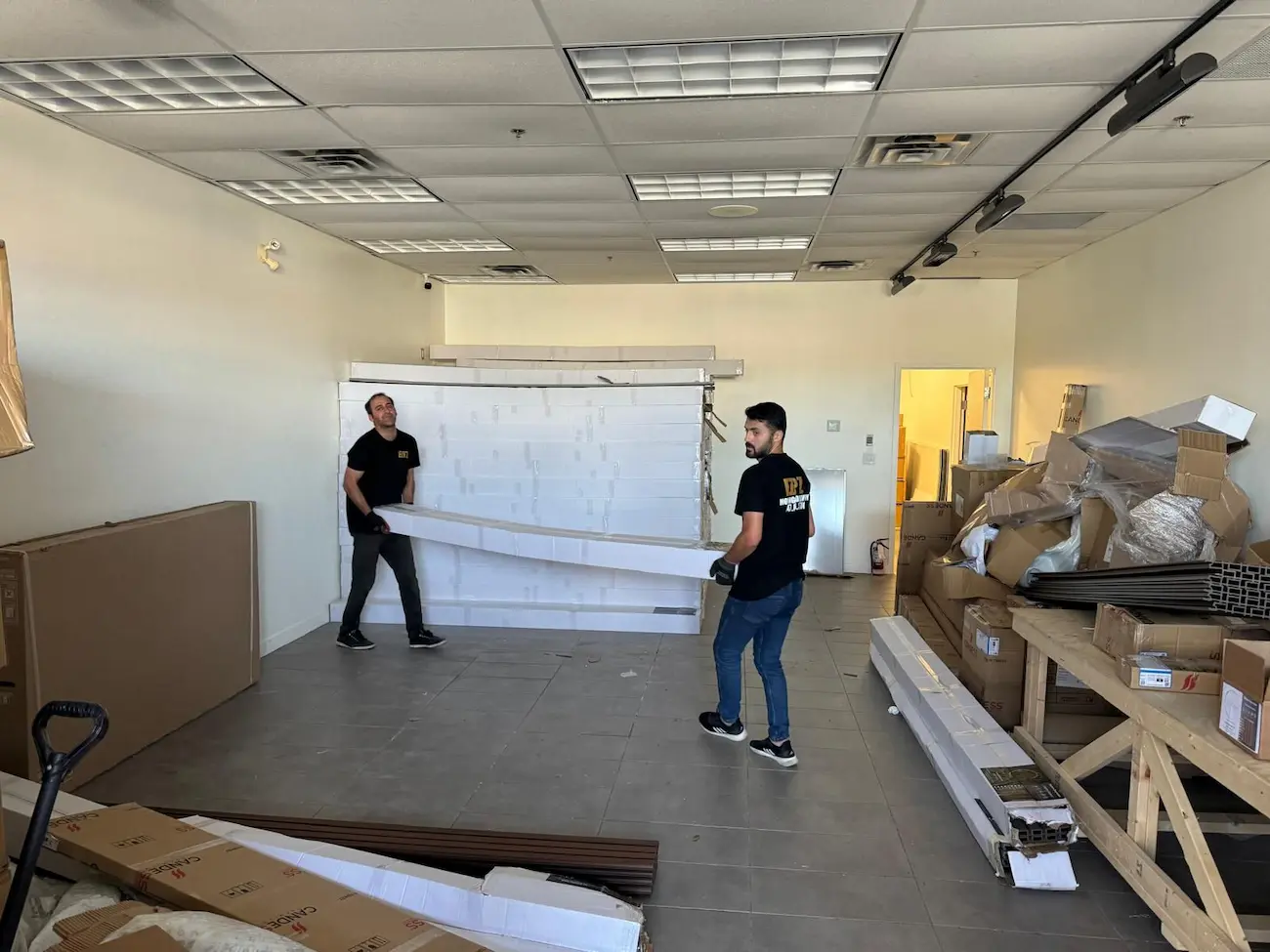
Hiring professional movers in Toronto isn't a luxury. It's risk management — for your furniture, your floors, your back, and your time. The cost of a damaged piece of furniture, a wall that needs repainting, or a back injury that sidelines you for a week is real. So is the cost of realizing your friend's rented pickup truck is 40% too small for the job when you're already three hours into moving day.
At $100/hour, EZPZ Moving sits in a range that reflects the actual cost of doing this work in Toronto — a professional crew, proper equipment, appropriate insurance, and the experience to handle whatever the city puts in front of us. It isn't a bargain-basement rate that relies on hidden fees to make the math work. And it isn't a premium that isn't justified by what's delivered.
The cost of moving in Toronto depends far less on how far you're going and far more on how prepared you are when moving day arrives.
Most people spend considerable time researching and comparing moving companies, then spend very little time preparing for the move itself. In reality, preparation consistently has a larger impact on your final cost than the company you choose. When your elevator is pre-booked, your boxes are labelled and stacked by room, your parking situation is resolved, and we arrive with a complete picture of the job — everything moves faster, and your bill reflects that.
Plan early. Book your elevator. Declutter. Tell us everything. And reach out to EZPZ Moving when you're ready for an estimate built on accuracy, not assumptions.
Looking for an Accurate Moving Quote in Toronto?
Contact EZPZ Moving for a transparent estimate based on your home size, building access, move date, and specific requirements — no hidden fees, no vague ranges that double on the day.
Whether you're moving a condo in Downtown Toronto, a townhouse in Etobicoke, a detached home in Scarborough, or relocating your business anywhere across the GTA, our team is ready to give you a straight answer.
Explore our Toronto moving services:
Frequently Asked Questions: Moving Costs in Toronto
How much does it cost to move a 1-bedroom apartment in Toronto?
At EZPZ Moving's rate of $100/hour, a local 1-bedroom apartment move in Toronto typically runs between $400 and $600. The final cost depends on building access, whether the freight elevator is pre-booked, how packed and organized the unit is when we arrive, and any specialty items that require additional handling.
How much do movers cost per hour in Toronto?
EZPZ Moving charges $100/hour for local Toronto moves. This rate includes a professional crew of 2 to 3 movers, a properly sized moving truck, protective materials, loading, transport, unloading, and standard furniture disassembly or reassembly where required. No separate fuel levy or equipment surcharge is added to the rate.
Does EZPZ Moving charge travel time?
Yes. Like most professional Toronto movers, travel time from our depot to your pickup address is factored into the total billable hours. We explain exactly how this is calculated during the quoting process — there are no surprises on the final invoice.
Why is moving in Toronto more expensive than in smaller cities?
The hourly rate isn't necessarily higher — but the hours often are. Toronto-specific factors including freight elevator booking requirements, shared loading docks, downtown traffic, street parking restrictions, permit requirements for many residential streets, and the physical density of the city all add labour time to moves that would be faster in less complex urban environments.
What's the cheapest time to move in Toronto?
Mid-week and mid-month dates are consistently easier to schedule, offer more crew flexibility, and tend to result in smoother moves overall. Month-end dates — particularly the last three to four days of the month — and long weekends are the busiest and most congested periods. If cost and logistics are priorities, avoid those windows when possible.
Do Toronto movers charge HST?
Most professional moving companies charge HST (13%) on their services. When comparing quotes from different Toronto movers, always confirm whether HST is included in the quoted hourly rate or added separately. A company quoting $90/hour plus HST is effectively charging $101.70/hour — higher than our all-in $100/hour rate.
Do you charge extra for pianos or heavy specialty items?
Yes. Items such as upright or grand pianos, gun safes, large marble furniture, and heavy commercial gym equipment require additional crew members, specialized moving equipment, and advance planning. These items are quoted separately when disclosed before moving day. Always mention specialty items during the booking process so we can arrive properly prepared.
Is it worth hiring professional movers in Toronto instead of renting a truck?
For most people, yes — particularly for anything larger than a small studio. DIY truck rental costs more than most people anticipate once you factor in fuel, insurance, moving equipment rental, the physical toll of a full moving day, and the real risk of damage to items or property. Professional movers bring experience, equipment, and efficiency that typically save time, reduce stress, and often lower the total cost compared to a DIY move that runs over schedule.